Children and teenagers
Language difficulties.
-
«My little boy is so bright, he understands everything, but there are some sounds he just can't make.»
-
«I can't understand my little one. Sometimes I ask him to say it again and he gets it right just once, then the next day it won't come out at all.»
-
«His teachers have suggested a speech and language assessment. They say he's a clever boy, but he's behind with his language.»
More often than not, the first contact begins like this.
Why it happens
What I work on.
Language difficulties show up in many different ways, on their own or woven together with other parts of a child's development. These are the ones I come across most often at the practice.
-
Language delay
The first words arrive later than expected, or stay few for a long time. Sometimes it's just a phase, sometimes it's a sign worth looking at more closely.
-
Sounds and pronunciation
Sounds that are missing, replaced with others, or produced differently from what you'd expect at that age.
-
Understanding and expressing
Some children understand everything but struggle to put sentences together, while others understand less than they appear to.
-
Stuttering
Repetitions, blocks or drawn-out sounds that interrupt the flow of speech. I devoted my degree dissertation to it.
-
Language and development
When language is intertwined with autism, with hearing loss, or with a broader developmental picture, I support it as part of the whole.
How the assessment works.
We always begin with a careful case history: you tell me how the child's earliest stages of life unfolded, whether language or learning difficulties run in the family, and how their communication has developed over time.
-
First contact
You tell me what's worrying you, the child's age, and what the school or paediatrician has noticed. Together we work out whether an assessment makes sense, with no obligation at all.
-
Shared assessment
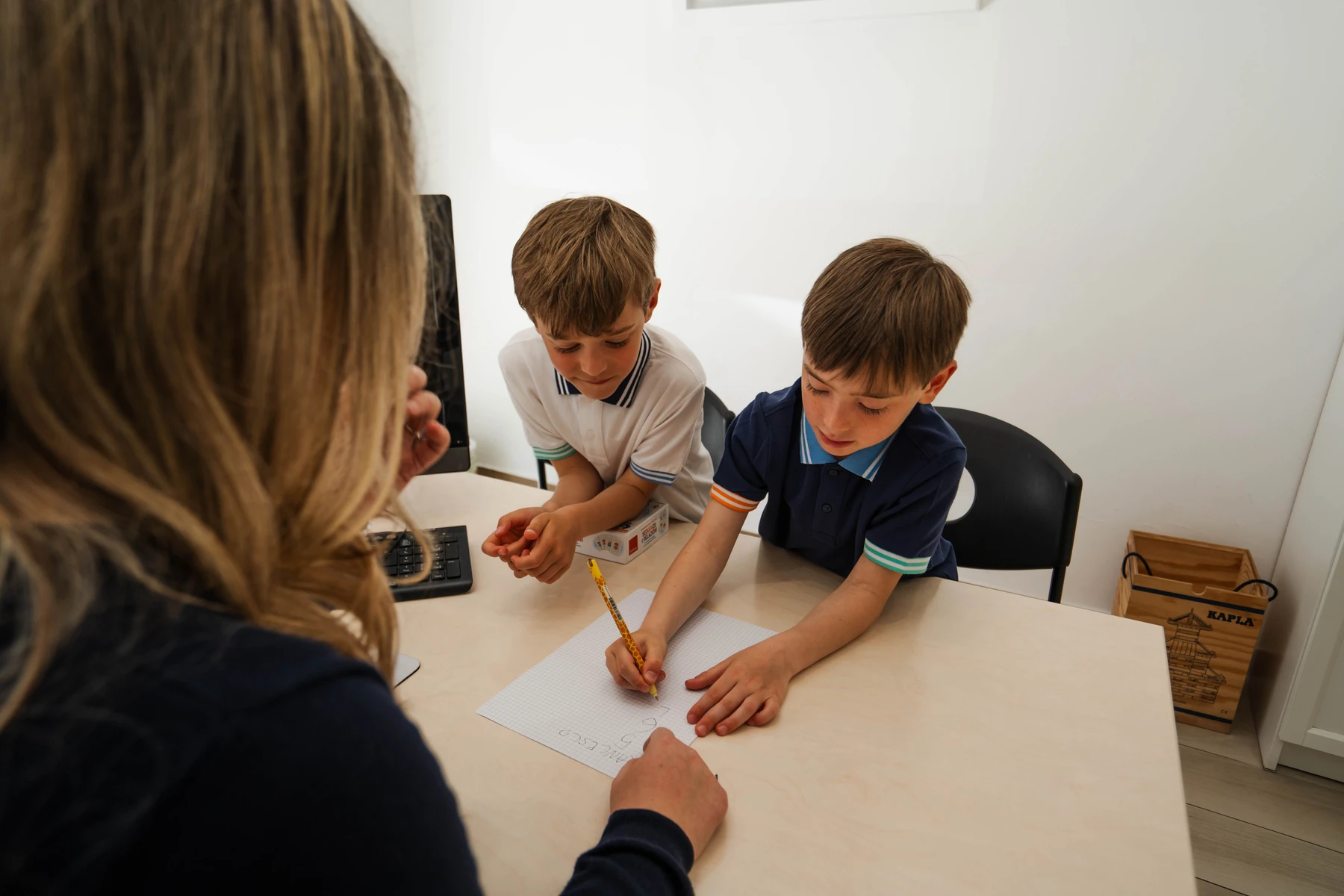
I observe closely, over one or more meetings, without rushing. I watch how they communicate, how they play, how they are. You're part of the process, not a spectator.
-
Feedback meeting
I explain what I've seen in plain words, without jargon. No labels carelessly thrown around: just an honest picture and what we can do with it.
-
Tailored support
If a course of support is needed, we build it around the person, with shared goals that we review along the way. Never a package decided in advance.
With very young children, the assessment takes a few extra meetings: they need time to trust me, and I need time to truly get to know them.

An image I often use
The airport metaphor.
Imagine landing in a country whose language you don't speak. You're at the airport and someone says a sentence to you: you'd find it really hard to pick out the individual sounds that make it up. Not because you can't hear, and not because there's anything wrong with your reasoning. You simply don't yet have access to that sound system, you don't recognise it.
The same thing happens to some children with their own mother tongue: they can hear the sounds, but the system that lets you take them apart, recognise them and put them back together struggles to work. That's where we work.
When an assessment makes sense.
Every child has their own pace, and not everything that worries you is a difficulty. But certain signs are worth looking at calmly.
When the difficulty is phonological, the pathway begins with a phase of sound awareness and then a phase of setting up articulation. When instead the difficulty is an articulatory distortion, we focus mainly on the motor pattern: the child learns where to place the tongue, how to move it, and we use tools that help them feel the correct posture. They are two different pathways, and a good assessment is precisely what tells us which of the two to take.
- At two or three years old, they still use very few words
- They understand everything, but struggle to make themselves understood when they speak
- People outside the family find it hard to understand them
- They get frustrated or give up when they can't say what they want
- They often repeat syllables, or get stuck on certain words
- Their teachers have noticed something, even if the paediatrician says it's still early
When it doesn't travel alone
Language within a broader picture.
Language disorders can also appear within broader pictures. Sometimes the disorder stems from communicative foundations that haven't fully developed, or from difficulties with executive functions, which underpin the processes of expression and learning.
And then there are pragmatic skills, the ones to do with how a child uses language to be with others: asking, telling, taking turns, getting a bit of irony, reading a situation. It's a part of language that often gets overlooked, and yet it weighs heavily on everyday life.
There's also one figure worth keeping in mind: about half of children with a phonological disorder go on to develop a specific learning disorder, what at school we call SLD (specific learning disorders). That's why an early assessment, even just for peace of mind, makes sense.
The part that often gets forgotten
What the child feels, inside.
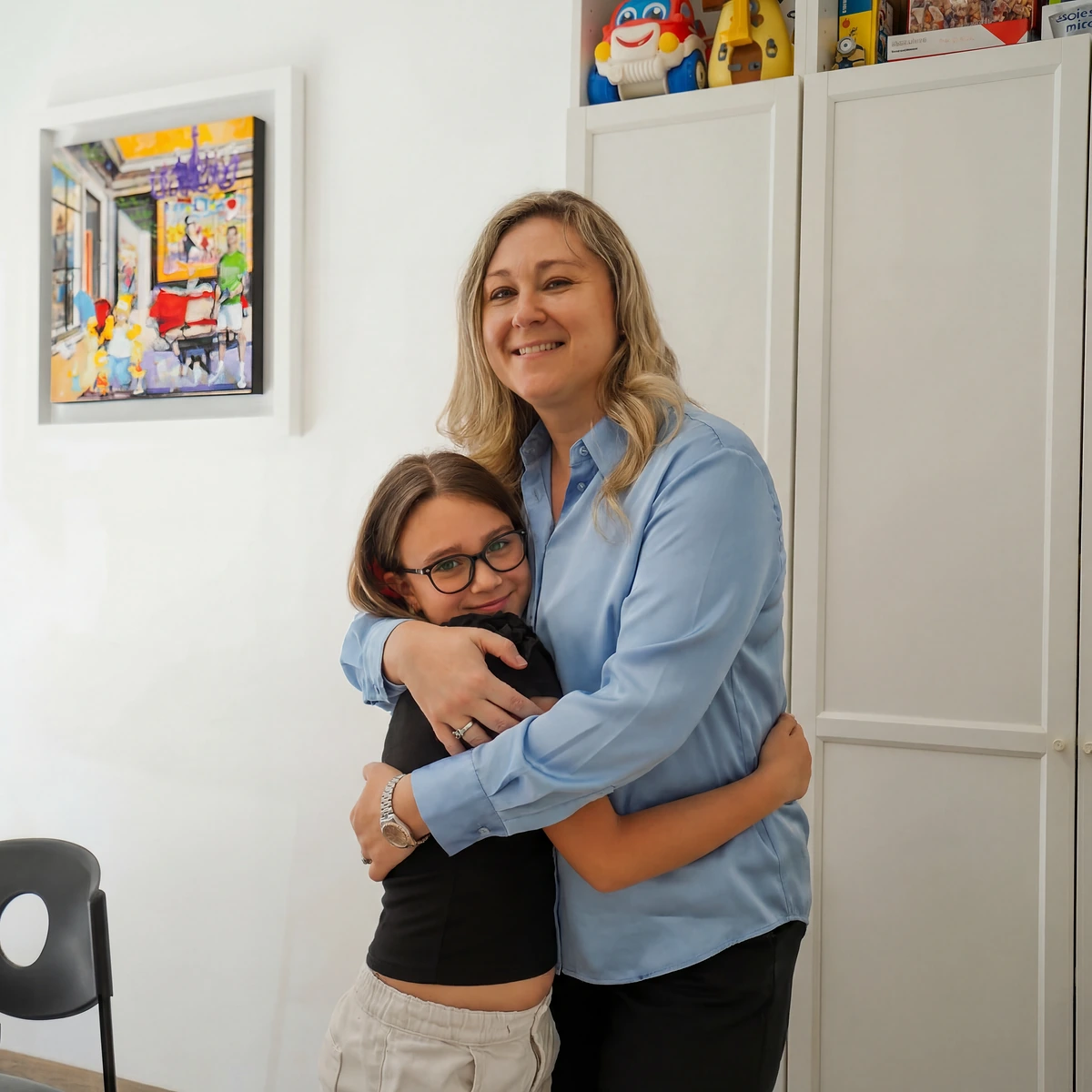
There's one aspect very close to my heart: the emotional experience. When a child is bright and knows perfectly well what they want to say, but then isn't understood, they become frustrated.
From there anything can happen: outbursts of anger, aggression, or the opposite, a quiet withdrawal. The child stops trying, gives up on repeating what they were asking for, makes themselves small. It's a cost you don't see straight away, but one that gets paid.
That's why, alongside the work on sounds and language, I always keep an eye on how the child is doing within their relationships, with their peers and with adults.
How long a course of therapy lasts.
I don't work with fixed packages of sessions decided in advance, and you won't find a price list on this site. How long it takes depends on the person and on the goals we set together: an assessment might be done in a single meeting, while a course of support can last a few months or accompany a child's growth for longer. No two journeys are the same, and we fine-tune ours as we go.
What we can do, as adults.
We adults around the child, parents first of all, can support these little fragilities with pathways tailored to the individual child, ones that act as an accelerator for their development. It isn't about forcing, it's about clearing obstacles and giving tools. That way the potential the child already holds inside can truly flourish, in their own way and in their own time.